The health of women and girls is one of the clearest reflections of a society’s values. It reveals what we choose to protect, what we choose to ignore, and whose lives we consider worthy of investment. Today, that mirror shows a world where progress is real, but inequity remains deeply ingrained. Despite some progress made, the gains remain fragile, uneven, and too often overshadowed by persistent gaps in autonomy, safety, and access to care. The truth is simple: where a woman is born still determines far too much about her health, the choices she makes, and her future.
A Landscape Marked by Progress and Profound Gaps
Globally, maternal mortality has declined, but not fast enough. Every two minutes, a woman dies from pregnancy or childbirth most from preventable causes.[1] Adolescent girls face some of the highest risks, especially in regions where early marriage and limited reproductive autonomy remain the norm. Millions of women still lack access to basic reproductive health services. In many countries, gender-based violence is a public health emergency, affecting one in three women in their lifetime.[2] Additionally, the journey to adulthood for many girls are often shaped by forces beyond their control such as poverty, harmful norms, conflict, and the simple fact that their health needs are too often dismissed as secondary. These are not isolated issues, rather they are interconnected threads in a global tapestry of inequality.
The Weight of Inequity
The health of women and girls is shaped not only by biological differences, but also by structural and systemic forces that perpetuate inequality. These factors include:
- Economic inequality which limits access to care, nutritious food, and safe environments.
- Cultural norms that dictate whose pain is believed, whose bodies are controlled, and whose health is prioritized.
- Conflict and displacement that expose women and girls to violence, exploitation, and disrupted care.
- Climate change that disproportionately affects women, who often bear responsibility for food, water, and caregiving.
- Health systems that are either inaccessible or run by males.
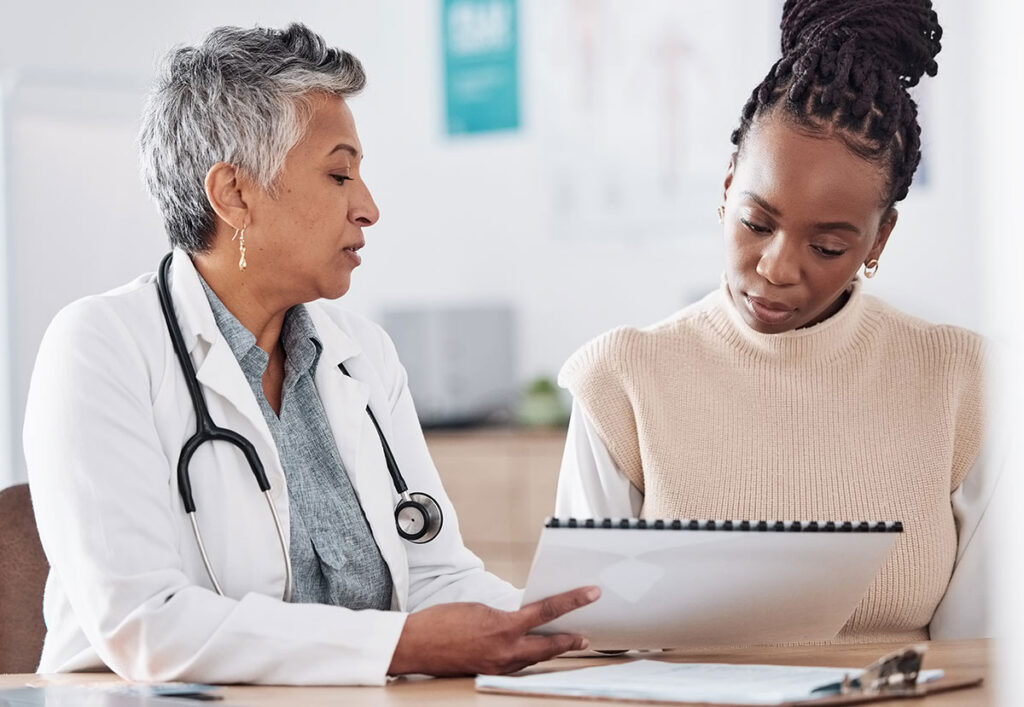
The result is a world where women’s symptoms are dismissed, their pain minimized, and their health outcomes consistently worse than men’s across a range of conditions.
The Cost of Neglect
When women and girls are unhealthy, societies suffer. Maternal deaths devastate families. Lack of reproductive autonomy limits economic growth. Gender-based violence strains health systems and fractures communities. Additionally, when girls miss school due to menstruation, illness, or unsafe environments, the consequences echo across generations. So, investing in women and girls’ health is not only a moral imperative, but also one of the most cost-effective strategies for global development. Healthier women raise healthier children, build stronger economies, and contribute to more stable societies.
A Future Worth Building
Despite the challenges, the story of women’s and girls’ health is also a story of resilience and possibility. Women are leading health movements, shaping policies, and demanding accountability. Girls are now advocating for their rights, challenging stigma, and redefining what is possible for their generation. Communities are innovating and health workers are pushing boundaries. Researchers are finally centering on women’s bodies and experiences. Global momentum is growing in a world where women’s health is no longer an afterthought, but rather a foundation.
The path forward is clear:
- Invest in sexual and reproductive health and rights of women and girls.
- Protect women and girls from violence.
- Build health systems that listen to women and reflect their realities.
- Fund research that includes more women and girls.
The health of women and girls is not a niche issue but a global priority that determines the wellbeing of families, communities, and nations. Until every woman and girl no matter where she lives can access the care, respect, and autonomy she deserves, our work remains unfinished.
[1] World Health Organization: Maternal Morbidity
https://www.who.int/news-room/fact-sheets/detail/maternal-mortality
[2] United Nations Women: Facts and Figures: Ending Violence Against Women
https://www.unwomen.org/en/articles/facts-and-figures/facts-and-figures-ending-violence-against-women#89310
Additional Resources on Health of Women and Girls
- Center for Disease Control: Women’s Health – Elevating Health of Girls Worldwide
https://www.cdc.gov/womens-health/features/girls-health.html - US Department of Health and Human Services. Healthy People 2030: Women
https://odphp.health.gov/healthypeople/objectives-and-data/browse-objectives/women - Center for Disease Control: Women’s Health
https://www.cdc.gov/womens-health/index.html - World Health Organization: Women’s Health
https://www.who.int/health-topics/women-s-health#tab=tab_1 - UN Women: Six Uncomfortable Truths About Women’s Health
https://www.unwomen.org/en/articles/explainer/six-uncomfortable-truths-about-womens-health - Harvard Health Publishing/Harvard Medical School: Women’s Health https://www.health.harvard.edu/topics/womens-health