
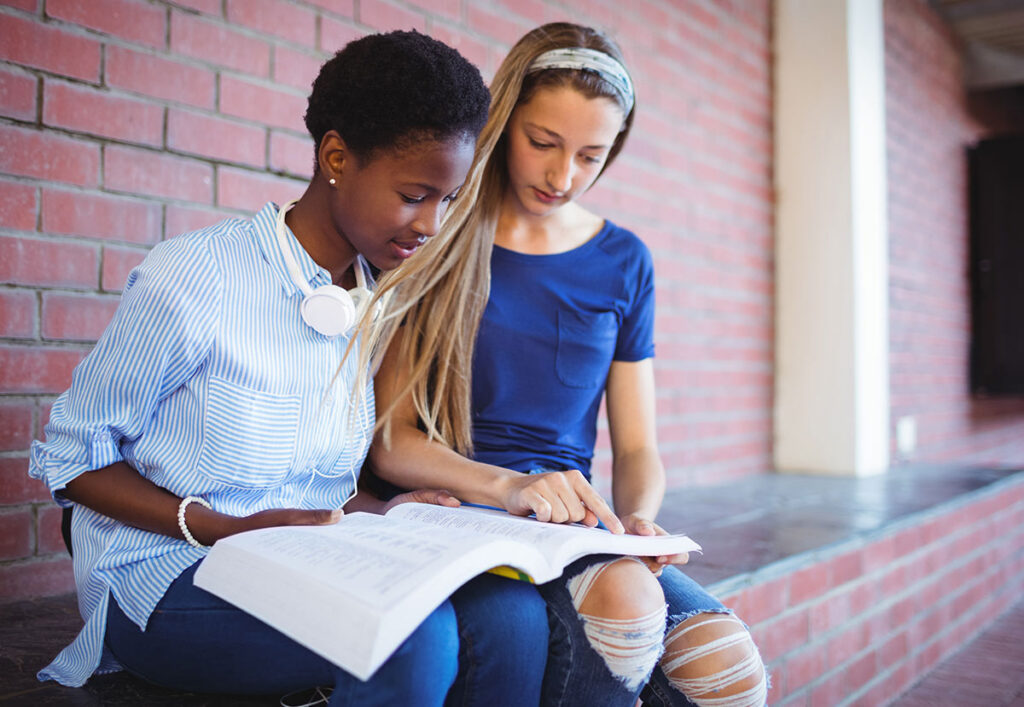
Worldwide 119 million girls are currently out of school[1]. So, the sad reality remains that in a different corner of the world, there is a girl who wakes up with a question in her heart: What could my life become if I were allowed to learn?Today she may be walking miles to a school that may not exist tomorrow. She may also struggle with being made aware that her brothers’ dreams matter more than her own even though she is brilliant, curious, and ready. Then the question becomes, is the world ready to open doors for her to learn and grow?
Pushing for girls’ education is not just a policy choice or a development goal but rather a quiet revolution with the power to reshape entire societies. This is because when a girl learns, the world shifts. Education gives her the language to advocate for her health, her rights, and her future. It also gives her the confidence to step into leadership, the skills to earn an income, and the knowledge to raise a healthier family. Communities with educated girls see lower rates of child marriages, stronger economies, and more resilient social systems. The ripple effect is undeniable: one girl’s education can transform generations. Giving her the opportunity to learn and grow and it arms her with the confidence to take on the world. She becomes a woman who can read a medical chart, negotiate a salary, vote with intention, and challenge harmful norms. As a mother who raises children, her kids will dream big dreams as she learns to see possibilities where others see limits.
Nevertheless, the path to learning is not the same for every girl. For many girls, the journey is steep and riddled with challenges.
- Poverty forces families to choose which child goes to school and too often, it is not the daughter.
- Gender norms whisper that a girl’s place is in the home, not the classroom.
- Violence and insecurity makes the walk to school dangerous.
- Lack of sanitation especially menstrual hygiene facilities and resources, pushes girls out of school once they reach adolescence.
- Conflict and displacement erases years of learning, with girls being the first to be pulled out and the last to return.
- Digital divide widens the gap even further as education moves online.
These barriers are not abstract, rather they are the daily realities that silence the potential of many girls.
Despite these challenges, girls continue to rise. Many study by candlelight and teach themselves from borrowed books. This type of determination is a reminder that talent may be universal, but opportunities are not.
So, advocating for girls’ education is not charity, it is social justice. This is because it recognizes that every girl, no matter where she is born, deserves the chance to shape her own future. It is the belief that societies flourish when women and girls are empowered to contribute fully and that global progress depends on unlocking the brilliance of a large portion of the world’s population. The world changes when girls learn. So, the issue is not whether we can afford to educate them, but rather if we can continue to deal with the ramifications of not doing so.
[1] UNICEF Girls Education
https://www.unicef.org/education/girls-education
Additional Readings on Girls’ Education:
- UNICEF: Girls Education
https://www.unicef.org/education/girls-education - UNESCO: Key Data on Girls and Women’s Right to Education
https://www.unesco.org/en/articles/key-data-girls-and-womens-right-education - UN Women: Fast facts: 30 years of uneven progress for adolescent girls
https://www.unwomen.org/en/news-stories/press-release/2025/03/fast-facts-30-years-of-uneven-progress-for-adolescent-girls - Harvard Kennedy School: To Improve Women’s Lives, Start by Improving Girls’ Education
https://bsc.hks.harvard.edu/2021/03/08/to-improve-womens-lives-start-by-improving-girls-education/ - World Bank Group: Girls Education
https://www.worldbank.org/ext/en/topic/education/girls-education