A Personal and Professional Decision to Embrace Resilience

Choosing to rise, again and again, is the quiet work that changes everything.

By Bernadette Okwu-Gage & Steve Gage

At some point, everyone meets a setback that feels too large, a change that comes too quickly, or a loss that leaves no clear next step. In that moment, resilience begins not as a trait reserved for a fortunate few, but as a choice renewed daily. It is the decision to face difficulty honestly, keep moving with purpose, and become stronger without becoming hardened. Though resilience is often treated as a buzzword, its meaning is simple: the capacity to see reality clearly, draw meaning from hardship, and act with the resources available. In a world shaped by constant disruption, economic, technological, organizational, and personal, it may be one of the most valuable capabilities we can cultivate.

Facing Reality Without Flinching

Resilience starts with clear-eyed acceptance. Resilient people do not deny hard truths or wait for easier conditions before acting. They look directly at what is happening and begin there. This is not pessimism; it is disciplined hope. Only when we see a situation honestly can we respond to it wisely. Acceptance also creates room for meaning. Difficult seasons rarely feel purposeful while we are living through them. Yet they often teach us to lead, deepen our empathy, or force a reinvention we would not have chosen but needed. Learning to ask, “What can this moment teach me?” can turn hardship into growth.

Improvising with What You Have

Resilience also requires resourcefulness. We define this as our willingness to act before conditions are perfect. The people and teams who weather disruption best are not always those with the most resources rather, they are often those most willing to experiment, adapt, and use what is already in hand. Flexibility turns uncertainty from a roadblock into a path forward.

A Reservoir not a Reserve Tank

Resilience is not a reserve tank we drain in crisis. Rather, it is a reservoir we fill through daily choices. Optimism replenishes it, so does energy, rest, physical and mental well-being, and the discipline to care for ourselves when life’s pressure makes that care feel optional. Connection is just as essential. Mentors, friends, colleagues, and communities remind us that endurance is not meant to be solitary. Genuine support helps people recover faster, adapt more effectively, and carry difficult seasons without carrying them alone.

Why Organizations Cannot Outsource Resilience Solely to Individuals

Individual resilience cannot replace organizational responsibility. Asking people to “be tougher” in the face of unsustainable workloads, unclear expectations, or unsupportive leadership is unfair and ineffective. Real organizational resilience requires cultures where people can raise concerns safely, use flexible policies without penalty, and rely on managers who support both performance and its people. Fear of taking time off, flexibility that exists only on paper, and leaders who reward burnout all weaken the resilience an organization’s claims to value. The strongest organizations treat resilience as shared infrastructure that is built intentionally, maintained consistently, and made available to everyone.

Reinvention as a Way of Working

As technology, markets, and expectations continue to shift faster than ever, resilience also means reinvention. It means learning new skills, questioning old assumptions, and adapting before familiar ways of working break down. The professionals who thrive are not those who resist change most fiercely, but those who build the habit of evolving with it.

A Call to Action

Choosing resilience is not one dramatic act. Instead, it is the daily practice of facing reality, finding meaning and using what is available. It also entails protecting our well-being, leaning on others, and expecting organizations to make endurance sustainable rather than heroic.

None of us builds resilience alone, and none of us should have to. When individuals meet hardship with honesty and hope, and organizations build cultures that genuinely support their people, resilience becomes more than a personal burden. It becomes a shared strength, one that helps us rise to meet what comes next, together.

For More Insight:

Auger-Domínguez, D. (2025, March 25). How to Build Career Resilience in Uncertain Times. Harvard Business Review.

Coutu, D. L. (2002). How Resilience Works. Harvard Business Review.

King, D. D., & McSpedon, M. R. (2022, June 17). What Leaders Get Wrong About Resilience. Harvard Business Review.

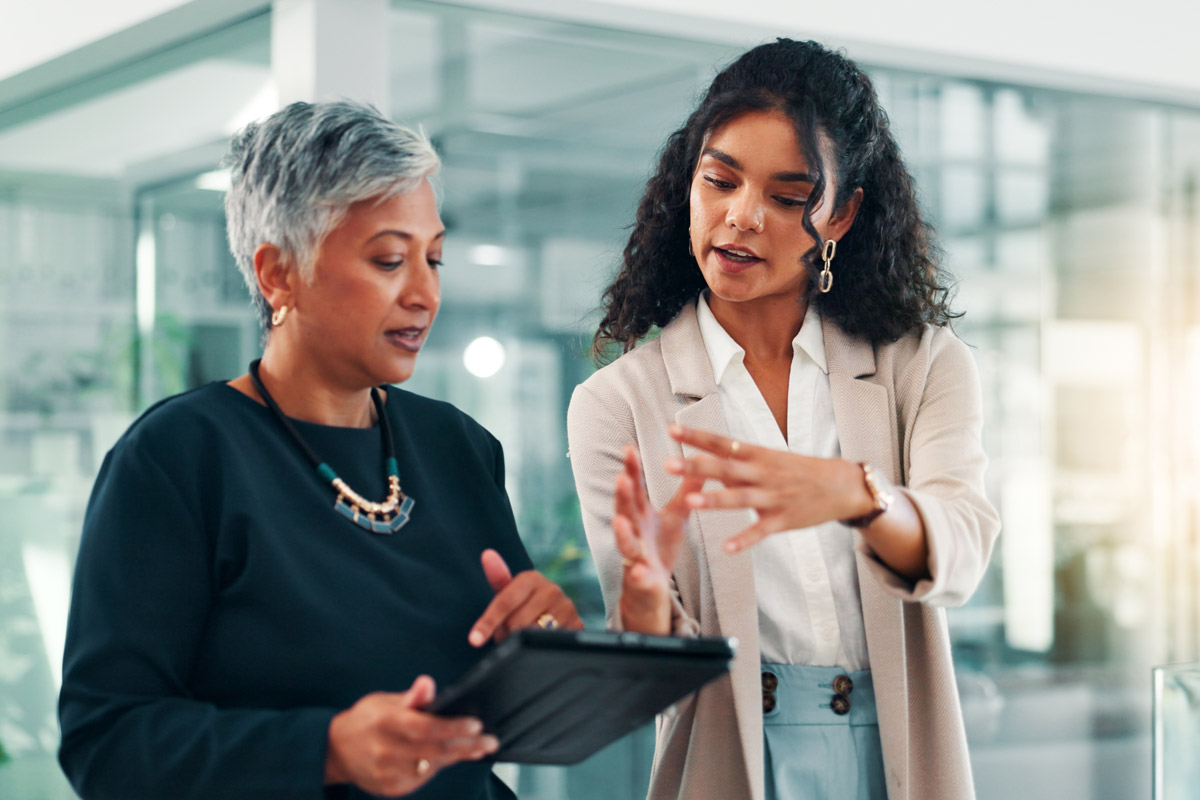
Why Great Storytelling Matters

In every organization, every community, every movement, there is a story at the center, spoken or unspoken that is shaping what people believe, how they behave, and what they imagine is possible. Most of the time, that story is fragmented, outdated, or buried beneath the rubble. But when the right story is uncovered and told with intention, everything changes.

My consulting practice is built on a simple truth: great storytelling is not a soft skill, rather it is a strategic advantage. A great story does not just communicate, it connects, builds trust, and creates meaning in a world loaded with information. It turns data into insight, insight into emotion, and emotion into action. It gives people a reason to care and a role to play. This is the work I do.

I help leaders, teams, and mission-driven organizations find the story beneath the surface, the one that reveals their purpose, aligns their people, and accelerates their impact. I translate complexity into clarity. I craft narratives that resonate across audiences, cultures, and contexts. I develop messages that move organizations from intention to influence. This is because when people understand the story, they understand the stakes and they are moved to act. When they feel the story, they commit to the work. When they share the right story, it improves commitment and performance.

Storytelling is how we help shift culture, mobilize communities, and spark change for a better future. It is how we turn vision into momentum and momentum into change that lasts. Great storytelling does not just describe change, it creates it, and that is why it sits at the center of everything I help organizations do.

Great Resources on Storytelling for Impact:

  1. Boris V: What Make storytelling So Effective for Learning. Harvard Business Impact  
    https://www.harvardbusiness.org/insight/what-makes-storytelling-so-effective-for-learning/
  2. Harvard Business Review: Why Storytelling Matters When Changing Company Culture  
    https://hbr.org/podcast/2026/03/why-storytelling-matters-when-changing-company-culture
  3. New York Times: Why Storytelling is Your Business’s Secret Weapon
    https://nytlicensing.com/latest/marketing/storytelling-is-your-secret-weapon

The Health of Women and Girls Across the Globe

The health of women and girls is one of the clearest reflections of a society’s values. It reveals what we choose to protect, what we choose to ignore, and whose lives we consider worthy of investment. Today, that mirror shows a world where progress is real, but inequity remains deeply ingrained. Despite some progress made, the gains remain fragile, uneven, and too often overshadowed by persistent gaps in autonomy, safety, and access to care. The truth is simple: where a woman is born still determines far too much about her health, the choices she makes, and her future.

A Landscape Marked by Progress and Profound Gaps

Globally, maternal mortality has declined, but not fast enough. Every two minutes, a woman dies from pregnancy or childbirth most from preventable causes.[1] Adolescent girls face some of the highest risks, especially in regions where early marriage and limited reproductive autonomy remain the norm. Millions of women still lack access to basic reproductive health services. In many countries, gender-based violence is a public health emergency, affecting one in three women in their lifetime.[2] Additionally, the journey to adulthood for many girls are often shaped by forces beyond their control such as poverty, harmful norms, conflict, and the simple fact that their health needs are too often dismissed as secondary. These are not isolated issues, rather they are interconnected threads in a global tapestry of inequality.

The Weight of Inequity

The health of women and girls is shaped not only by biological differences, but also by structural and systemic forces that perpetuate inequality. These factors include:

  • Economic inequality which limits access to care, nutritious food, and safe environments.
  • Cultural norms that dictate whose pain is believed, whose bodies are controlled, and whose health is prioritized.
  • Conflict and displacement that expose women and girls to violence, exploitation, and disrupted care.
  • Climate change that disproportionately affects women, who often bear responsibility for food, water, and caregiving.
  • Health systems that are either inaccessible or run by males.

The result is a world where women’s symptoms are dismissed, their pain minimized, and their health outcomes consistently worse than men’s across a range of conditions.

The Cost of Neglect

When women and girls are unhealthy, societies suffer. Maternal deaths devastate families. Lack of reproductive autonomy limits economic growth. Gender-based violence strains health systems and fractures communities. Additionally, when girls miss school due to menstruation, illness, or unsafe environments, the consequences echo across generations. So, investing in women and girls’ health is not only a moral imperative, but also one of the most cost-effective strategies for global development. Healthier women raise healthier children, build stronger economies, and contribute to more stable societies.

A Future Worth Building

Despite the challenges, the story of women’s and girls’ health is also a story of resilience and possibility. Women are leading health movements, shaping policies, and demanding accountability. Girls are now advocating for their rights, challenging stigma, and redefining what is possible for their generation. Communities are innovating and health workers are pushing boundaries. Researchers are finally centering on women’s bodies and experiences. Global momentum is growing in a world where women’s health is no longer an afterthought, but rather a foundation.

The path forward is clear:

  • Invest in sexual and reproductive health and rights of women and girls.
  • Protect women and girls from violence.
  • Build health systems that listen to women and reflect their realities.
  • Fund research that includes more women and girls.

The health of women and girls is not a niche issue but a global priority that determines the wellbeing of families, communities, and nations. Until every woman and girl no matter where she lives can access the care, respect, and autonomy she deserves, our work remains unfinished.

[1] World Health Organization: Maternal Morbidity 
https://www.who.int/news-room/fact-sheets/detail/maternal-mortality

[2] United Nations Women: Facts and Figures: Ending Violence Against Women
https://www.unwomen.org/en/articles/facts-and-figures/facts-and-figures-ending-violence-against-women#89310

Additional Resources on Health of Women and Girls

  1. Center for Disease Control: Women’s Health – Elevating Health of Girls Worldwide
    https://www.cdc.gov/womens-health/features/girls-health.html
  2. US Department of Health and Human Services. Healthy People 2030: Women
    https://odphp.health.gov/healthypeople/objectives-and-data/browse-objectives/women
  3. Center for Disease Control: Women’s Health
    https://www.cdc.gov/womens-health/index.html
  4. World Health Organization: Women’s Health
    https://www.who.int/health-topics/women-s-health#tab=tab_1
  5. UN Women: Six Uncomfortable Truths About Women’s Health
    https://www.unwomen.org/en/articles/explainer/six-uncomfortable-truths-about-womens-health
  6. Harvard Health Publishing/Harvard Medical School: Women’s Health https://www.health.harvard.edu/topics/womens-health

Why Educating Girls Changes Everything

Worldwide 119 million girls are currently out of school[1]. So, the sad reality remains that in a different corner of the world, there is a girl who wakes up with a question in her heart: What could my life become if I were allowed to learn?Today she may be walking miles to a school that may not exist tomorrow. She may also struggle with being made aware that her brothers’ dreams matter more than her own even though she is brilliant, curious, and ready. Then the question becomes, is the world ready to open doors for her to learn and grow?

Pushing for girls’ education is not just a policy choice or a development goal but rather a quiet revolution with the power to reshape entire societies. This is because when a girl learns, the world shifts. Education gives her the language to advocate for her health, her rights, and her future. It also gives her the confidence to step into leadership, the skills to earn an income, and the knowledge to raise a healthier family. Communities with educated girls see lower rates of child marriages, stronger economies, and more resilient social systems. The ripple effect is undeniable: one girl’s education can transform generations. Giving her the opportunity to learn and grow and it arms her with the confidence to take on the world. She becomes a woman who can read a medical chart, negotiate a salary, vote with intention, and challenge harmful norms. As a mother who raises children, her kids will dream big dreams as she learns to see possibilities where others see limits.

Nevertheless, the path to learning is not the same for every girl. For many girls, the journey is steep and riddled with challenges.

  • Poverty forces families to choose which child goes to school and too often, it is not the daughter.
  • Gender norms whisper that a girl’s place is in the home, not the classroom.
  • Violence and insecurity makes the walk to school dangerous.
  • Lack of sanitation especially menstrual hygiene facilities and resources, pushes girls out of school once they reach adolescence.
  • Conflict and displacement erases years of learning, with girls being the first to be pulled out and the last to return.
  • Digital divide widens the gap even further as education moves online.

These barriers are not abstract, rather they are the daily realities that silence the potential of many girls.

Despite these challenges, girls continue to rise. Many study by candlelight and teach themselves from borrowed books. This type of determination is a reminder that talent may be universal, but opportunities are not.

So, advocating for girls’ education is not charity, it is social justice. This is because it recognizes that every girl, no matter where she is born, deserves the chance to shape her own future. It is the belief that societies flourish when women and girls are empowered to contribute fully and that global progress depends on unlocking the brilliance of a large portion of the world’s population. The world changes when girls learn. So, the issue is not whether we can afford to educate them, but rather if we can continue to deal with the ramifications of not doing so.

[1] UNICEF Girls Education
https://www.unicef.org/education/girls-education

Additional Readings on Girls’ Education:

  1. UNICEF: Girls Education
    https://www.unicef.org/education/girls-education
  2. UNESCO: Key Data on Girls and Women’s Right to Education
    https://www.unesco.org/en/articles/key-data-girls-and-womens-right-education
  3. UN Women: Fast facts: 30 years of uneven progress for adolescent girls 
    https://www.unwomen.org/en/news-stories/press-release/2025/03/fast-facts-30-years-of-uneven-progress-for-adolescent-girls
  4. Harvard Kennedy School: To Improve Women’s Lives, Start by Improving Girls’ Education
    https://bsc.hks.harvard.edu/2021/03/08/to-improve-womens-lives-start-by-improving-girls-education/
  5. World Bank Group: Girls Education
    https://www.worldbank.org/ext/en/topic/education/girls-education